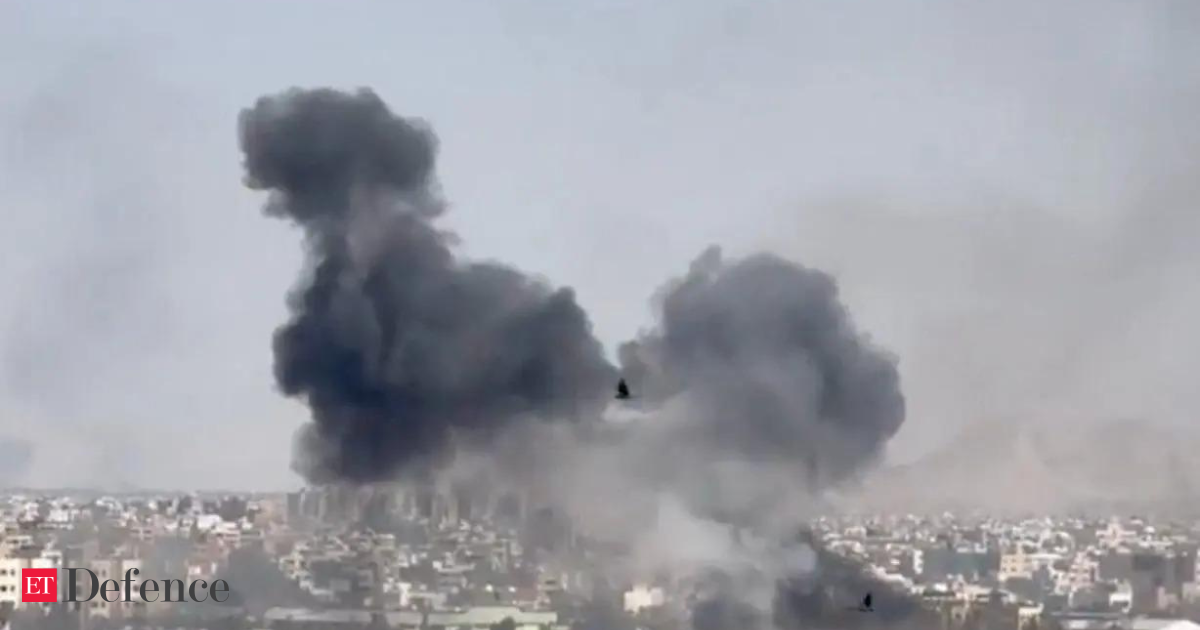
The early hours of Friday morning brought a fresh wave of concern and uncertainty to the Middle East, as reports emerged of explosions near Iran's central city of Isfahan. This event, widely perceived as Israel's retaliatory strike following Iran's unprecedented missile and drone attack days earlier, immediately sent ripples across the globe, impacting everything from regional stability to international flight paths. While initial reports focused on the vicinity of a military base housing fighter jets northwest of Isfahan, the subsequent disruptions to air travel and the strategic importance of the area quickly elevated discussions around an Isfahan airport strike and its broader implications.
This article delves into the details of what is understood about this limited strike, its underlying motivations, the immediate and potential long-term repercussions, and what it signals for the volatile relationship between Israel and Iran. Understanding the nuances of this event requires examining the strategic choices made by both sides and the delicate balance of power in an already tense region.
The Context: A Calculated Retaliation or Controlled Escalation?
The backdrop to the events in Isfahan is crucial. Days before, Iran launched an "unprecedented" assault involving hundreds of drones and missiles against Israel, a direct response to an earlier strike on its consulate in Damascus. While largely thwarted by Israeli air defenses and assistance from allies like the US and UK, the scale of the Iranian attack underscored a dangerous shift in the proxy conflict between the two nations.
Following this, the international community held its breath, awaiting Israel's response. US officials quickly conveyed that Israel's contemplated retaliation would be "narrow and limited," specifically designed to avoid civilian or nuclear targets. This aligns with the reported explosions occurring near a military base in Isfahan, rather than directly targeting civilian infrastructure or population centers. The decision to strike inside Iran was deemed necessary by Israel given the sheer magnitude of Iran's preceding assault, aiming to restore deterrence and send a clear message without triggering a full-scale regional war.
Interestingly, despite acknowledging Israel's right to defend itself, the United States, through President Biden, had reportedly advised Israel to "take the win" and refrain from a direct military response. The US did not give a "green light" for the strike, reflecting global concerns about further escalating tensions and deepening the crisis in the Middle East. This limited nature of the retaliation suggests Israel sought to balance its need for a decisive response with the imperative to avoid an uncontrollable regional conflagration, a testament to the immense international pressure for de-escalation.
Isfahan: A Strategic Target with Dual Significance
The choice of Isfahan as the location for the reported strike is highly significant. Isfahan is a major city in central Iran, home to several critical military installations, including airbases where fighter jets are housed, and sensitive nuclear facilities. While US officials explicitly stated that nuclear sites would not be targeted, the proximity of the explosions to such a crucial area carries immense symbolic and strategic weight.
The military base northwest of Isfahan, where the explosions were heard, represents a key component of Iran's defense capabilities. A strike in its vicinity demonstrates Israel's ability to penetrate Iranian airspace and deliver a message to the heart of its military infrastructure. The ripple effect of this action was immediately felt across Iran's aviation sector, with several airports, including Isfahan's Shahid Beheshti International Airport, cancelling outgoing flights and rerouting air traffic in the western portion of the country. This operational disruption, even if not a direct hit on the civilian airport itself, gave rise to the term Isfahan airport strike in public discourse, highlighting the wider impact on civilian life and infrastructure despite the military focus of the actual target.
The location also serves as a potent reminder of Iran's vulnerabilities. By targeting an area associated with both military prowess and sensitive programs, Israel aimed to project strength and resolve without crossing a threshold that Iran might consider an existential threat, which could trigger a much harsher response. The delicate balance was to inflict sufficient pain to deter future actions while leaving room for diplomatic off-ramps.
Immediate Repercussions and Heightened Regional Tensions
The immediate fallout from the Isfahan events was palpable. Reports of three explosions near the military base, said to have broken windows of nearby buildings, quickly led to widespread flight cancellations and air traffic rerouting across Iran. Travelers planning to depart from or arrive at airports like Isfahan Shahid Beheshti International Airport found their plans disrupted, underscoring the practical implications of such military actions. For more detailed information on flight disruptions, refer to our related article: Isfahan Airport Explosions: Israel's Strike and Flight Disruptions.
Iran's reaction to the perceived Israeli strike was closely watched. Earlier in the week, Iranian President Ebrahim Raisi had warned Israel that his country would deliver a "massive and harsh" response for even the "tiniest" invasion of its territory. Similarly, Iranian Foreign Minister Hossein Amir-Abdollahian had told CNN hours before the explosions that any further military action by Israel would provoke an "immediate and at a maximum level" retaliation. The limited nature of the reported strike in Isfahan, however, has placed Iran in a difficult position: how to respond without spiraling into a full-blown war, especially given the international community's calls for restraint.
The global community immediately voiced concerns about further escalation. Leaders worldwide urged both sides to de-escalate, fearing that continued tit-for-tat exchanges could plunge the Middle East into a far wider and more devastating conflict. The events near Isfahan thus served as a stark reminder of the region's fragility and the potential for a localized incident to ignite a broader crisis. To understand the deeper geopolitical currents at play, consider reading: Iran-Israel Tensions Rise: Understanding the Isfahan Strike.
Analyzing the "Limited" Nature of the Strike
Israel's decision to opt for a "narrow and limited" response, despite strong internal and external pressures for a more forceful retaliation, reveals a strategic calculation. This approach suggests several objectives:
- Deterrence with Restraint: To demonstrate capability and resolve to retaliate, thereby deterring future large-scale Iranian attacks, without provoking an immediate and overwhelming counter-response that could lead to a full-scale war.
- International Pressure: To heed calls from allies, particularly the US, for de-escalation and to avoid actions that could isolate Israel internationally.
- Strategic Ambiguity: The lack of immediate, direct official Israeli confirmation regarding the strike (and Iran's downplaying of its severity) creates a degree of ambiguity that can be strategically beneficial. It allows both sides some room to maneuver and potentially avoid further escalation without losing face.
- Message Delivery: By targeting a sensitive area like Isfahan, Israel delivered a clear message about its reach and capabilities, even if the damage was minimal. The psychological impact of being hit within its own borders is significant for Iran.
This controlled response is a high-stakes gamble, aiming to achieve strategic objectives while leaving open pathways to de-escalation. The effectiveness of this "limited strike" will ultimately be judged by Iran's subsequent actions and the trajectory of regional stability.
Implications for Global Air Travel and Regional Stability
While the focus remains on geopolitical tensions, the practical implications for civilians, particularly those traveling, are immediate. The disruptions caused by the Isfahan airport strike and other Iranian airport closures highlight the vulnerability of air travel to regional conflicts. Travelers are advised to:
- Stay Informed: Regularly check official airport and airline websites for the latest flight status updates.
- Monitor Travel Advisories: Consult government travel advisories for the Middle East region, as conditions can change rapidly.
- Consider Travel Insurance: Ensure travel insurance policies cover disruptions due to political instability or military actions.
Beyond immediate travel concerns, the long-term implications for regional stability are profound. The current tit-for-tat exchanges, however limited, elevate the risk of miscalculation and accidental escalation. The Middle East is a critical global artery for energy supplies and trade, and any sustained conflict could have far-reaching effects on international oil prices, supply chains, and economic stability worldwide. The international community remains on high alert, understanding that the delicate balance between deterrence and de-escalation will determine the region's immediate future.
The limited strike in Isfahan represents a pivotal moment in the ongoing shadow war between Israel and Iran. It underscores a strategic choice by Israel to respond definitively yet cautiously, aiming to restore deterrence without igniting a full-scale regional conflict. While the direct impact near a military base was the primary objective, the subsequent disruptions, including the temporary halt of operations at Isfahan's civilian airport, cemented the discussion around an Isfahan airport strike in public consciousness. The coming days and weeks will reveal whether this calculated move succeeds in de-escalating the immediate crisis or merely sets the stage for future, potentially more dangerous, confrontations. The international community, still grappling with multiple global challenges, watches anxiously, hoping for restraint and a path towards a more stable future in the Middle East.